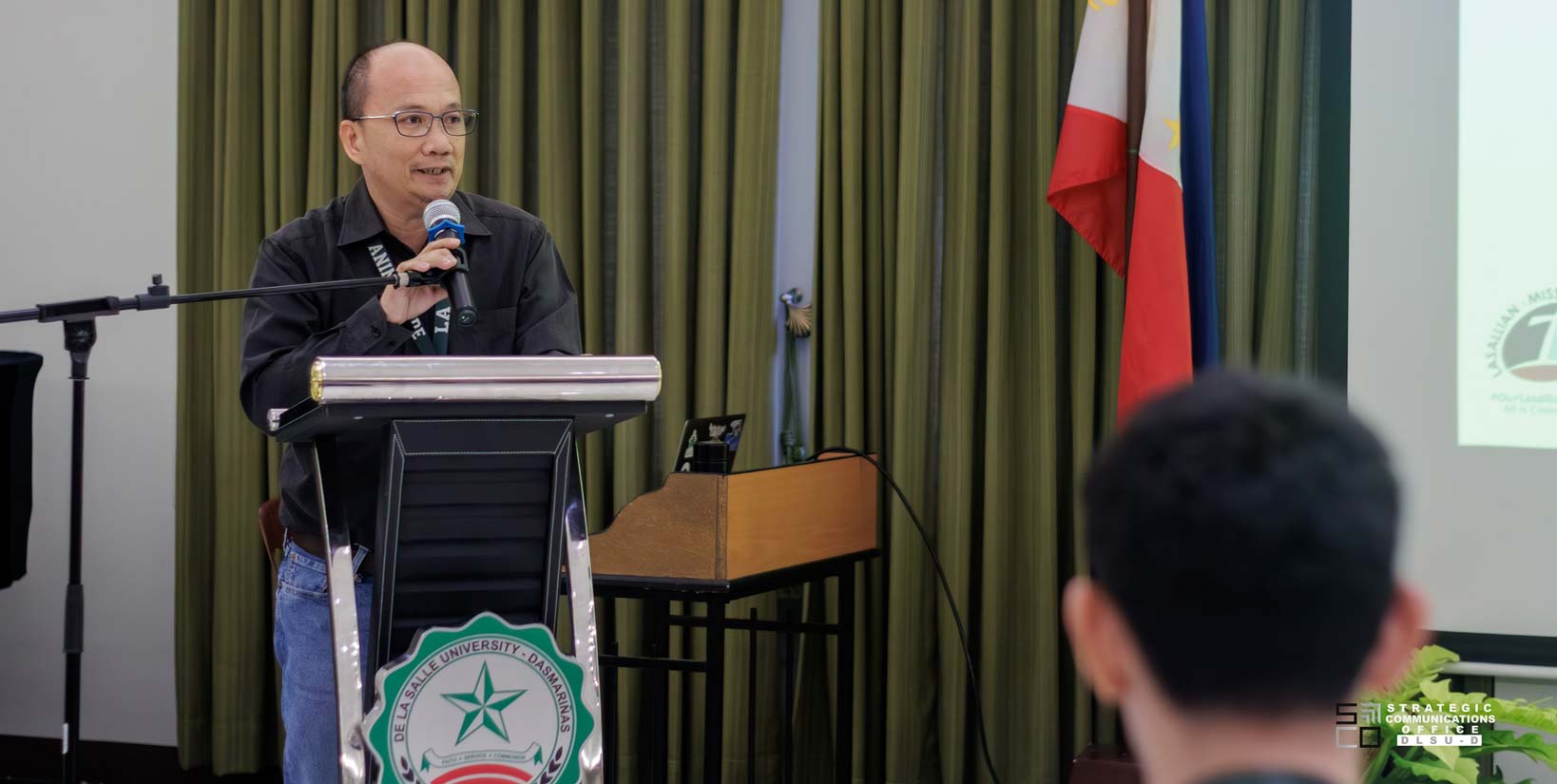
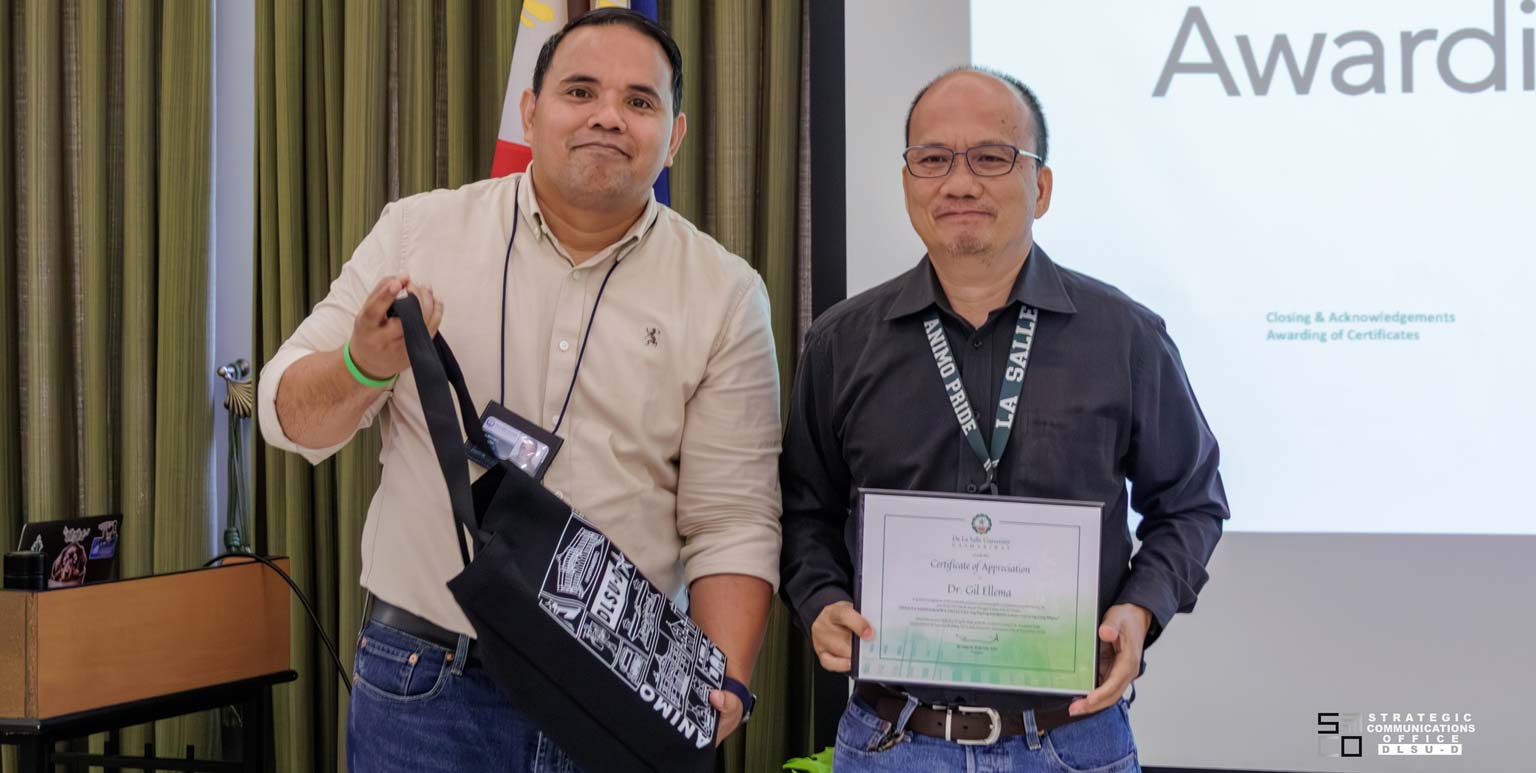
As a teacher of Religious Education, I find that Dr. Xiao Chua’s lecture offers more than a historical perspective; it is a theological invitation to see how God continues to act within the Filipino story. His framing of a Diyos na nakikipagkapwa-tao challenges us to recognize that divine presence is embodied in concrete struggles, relationships, and movements of the people.
Let me respond through three lenses: the lens of history as a guide or blueprint, the lens of Lasallian Reflection 11 with the theme, "All is Connected" (the theme of this year’s Lasallian Mission Festival [DLSU-D]), and the challenge from Fratres in Unum, the pastoral letter of the Brother Superior General, Br. Armin Luistro.
First Lens.
Five centuries of Catholicism in the Philippines are not a simple story of heroes and villains. It is a weave of grace and wound.
The Spanish colonial Church brought schools, hospitals, and parishes; structures that shaped national consciousness. But through the patronato real, the same Church was also part of a system that displaced indigenous communities and often stood closer to landlords than to the poor. We must hold both truths honestly: a Church that carried the Gospel, and a Church that sometimes failed it. Ang Diyos na nakipagkapwa-tao sa atin ay pumasok sa kasaysayang hindi malinis kundi magulo, and there, in that messy history, He chose to work.
And yet, within that imperfection, there were luminous moments. R. Ileto's work on the pasyon shows how ordinary Filipinos did not merely receive colonial Christianity passively. They reinterpreted the suffering and resurrection of Christ as the language of their own struggle for dignity. The pasyon was not just a devotional chant; it was a reflection of the faith of the poor, reading their lives in the light of the cross and resurrection.
Fast forward to 1986. At EDSA, rosaries and placards, religious sisters and activists, priests and ordinary citizens stood together. The message was unmistakable: Siya ay Diyos na nakisama, nakibahagi, nakibaka kasama ng sambayanan. We have to emphasize: the promise of EDSA is not yet complete; it is still unfinished. It is a prophetic memory that must continuously unsettle our complacency.
And the Second Plenary Council of the Philippines of 1991 (PCP II) gave that moment a name: the Church in the Philippines is called to be a Church of the Poor. It is a commitment: the Church must be found where the poor are, and our pastoral priorities must be judged by what they mean for those at the bottom.
Seen this way, history becomes a blueprint. It shows us where Christians are expected to stand: beside the voiceless, in the midst of those disadvantaged by the system, to be constantly challenged by their conditions.
Second lens.
If history shows us where we have been, the vision of Laudato Si’ and Lasallian Reflection 11 points to where we must go.
The Church’s mission today is no longer limited to political liberation or human rights advocacy alone. In an age marked by ecological crisis, inequality, and fragmentation, we are called to embrace an integral ecology, a worldview where: care for the earth is inseparable from care for the poor (“the cry of the earth is the cry of the poor”); and social injustice and environmental destruction are interconnected.
Dr. Chua’s concept of a Diyos na nakikipagkapwa-tao becomes even more meaningful in this context. If God enters into human history, then God is also present in the wounded earth, displaced communities, and excluded sectors.
Thus, the Church evolves by expanding its compassion. The same spirit that animated EDSA must now animate ecological movements, peace-building efforts, and good governance advocacy.
In this sense, the Church is called to become not only a defender of human dignity but also a guardian of creation and fraternity.
And the third lens.
To be Fratres in Unum, brothers and sisters as one, is to participate in this unfolding history of grace. Let me frame it in four verbs: Remember, Discern, Act, and Persevere.
Remember. We do not begin from nothing. Our identity as Lasallian and Catholic in the Philippines is rooted in concrete stories from our shared history: indigenous peoples displaced and empowered, missionaries who served and sometimes failed, movements of resistance, EDSA, PCP II, community pantries during the pandemic.
So, the first step is awareness. Do we know the story of our Church? Do we know the stories of the communities around our campus? Do we know the stories of our support personnel who keep the school running?
If we do not give time to history, especially adults, we leave our young people vulnerable to shallow narratives, fake news, revisionism, and a faith cut off from reality. Remembering grounds our response to God in concrete lives.
Discern. Not every trend deserves our imitation. Not every popular opinion should guide our choices. Discernment trains us to keep asking: Who is being left out? Whose voice is missing in our community decisions?
This is where religious education, Lasallian formation, community outreach, and other formative initiatives meet: their goal is not only to sharpen thinking, but to form conscience. The aim is not just to ask, “Is this effective?” but also, “Is this faithful to the Gospel and to our Lasallian values?”
Act in communion. What we remember and discern must lead to action. This action does not need to be spectacular. We can start on campus by greeting and genuinely acknowledging our support personnel (security guards, janitors, maintenance and canteen staff, etc.), treating classmates and teachers with respect, and refusing bullying and exclusion. These small practices, done seriously, are signs of pakikipagkapwa-tao.
In academics, it might mean choosing research studies or projects that respond to concrete needs: education gaps, mental health, livelihood issues, and environmental vulnerability.
In care for creation, it means participating in environmental efforts not just for extra credit, but as part of our faith: conserving energy, reducing waste, supporting meaningful reforestation or clean-up efforts, and questioning consumer habits that harm people and planet.
In a wider community, a Lasallian can ask: “What kind of professional do I want to be?” Someone who succeeds personally but remains silent in the face of corruption and exploitation? Or someone willing to be a prophetic voice inside institutions: government, business, church, NGOs, for those who rarely get a seat at the table?
And, persevere. Personal morality and charity are necessary but not sufficient. Justice requires structural engagement in policy, in institutions, in professional life, sustained over time. A Lasallian is not called to heroic one-time acts, but to faithful, consistent witness in every role they occupy.
To conclude,
Dr. Xiao’s talk leaves us with a theological insight: history is not just a record of the past; it reveals who God is.
The Filipino story, with all its wounds and hopes, reveals a God who does not remain far from us but one who chooses to dwell, struggle, and hope with the people.
Our task now is not simply to remember this God, but to become His witnesses in our choices, in our communities.
For in the end, the question is no longer: where is God in history?
But rather: will we, too, become God’s presence in the history we are now writing?
Gil A. Ellema
Religious Education Department