Latest News
Home | News | DLSU-D Recognized in THE Sustainability Impact Ratings
DLSU-D Recognized in THE Sustainability Impact Ratings
June 24, 2026 | By CSO
DLSU-D Recognized in THE Sustainability Impact Ratings
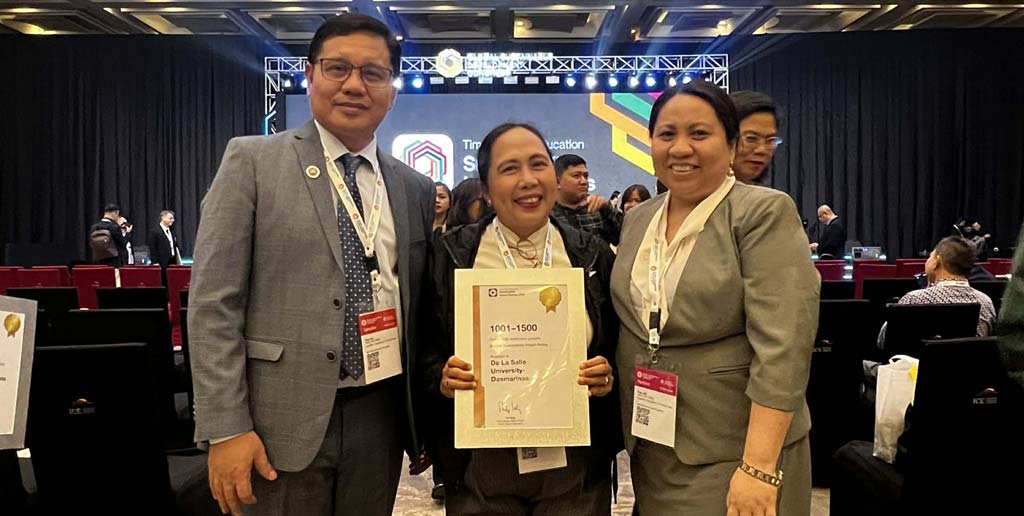
De La Salle University–Dasmariñas (DLSU-D) earned an Overall Sustainability Impact Rating of 1001–1500 in the Times Higher Education (THE) Sustainability Impact Ratings 2026, placing the University among 1,603 institutions worldwide recognized for their contributions to sustainable development.
DLSU-D also received rankings in the following Sustainable Development Goals (SDGs):
- SDG 14: Life Below Water (Ranked 301–400)
- SDG 6: Clean Water and Sanitation (Ranked 401–600)
- SDG 7: Affordable and Clean Energy (Ranked 401–600)
- SDG 12: Responsible Consumption and Production (Ranked 401–600)
- SDG 13: Climate Action (Ranked 401–600)
- SDG 3: Good Health and Wellbeing (Ranked 601–800)
- SDG 11: Sustainable Cities and Communities (Ranked 601–800)
- SDG 16: Peace, Justice, and Strong Institutions (Ranked 601–800)
- SDG 17: Partnerships for the Goals (Ranked 1,001–1,500)
Representing the University, Geraldine Zamora, Director of the Campus Sustainability Office, received the recognition during the THE Global Sustainable Development Congress.
In his letter to the community, Br. Iñigo Riola FSC inspired Lasallians to continue the mission to contribute towards building a more just and sustainable society.
"This recognition reflects the work of many members of our community who, in different ways, contribute to building a more just, sustainable, and compassionate society. It is encouraging to see our efforts recognized alongside institutions from across the globe," he said.
"As we celebrate this recognition, may it encourage us to continue pursuing excellence in teaching, research, community engagement, and sustainability as we deepen our contribution to society and to the Lasallian mission," he added.
The achievement reflects DLSU-D's continuing commitment to advancing sustainability through education, research, community engagement, and partnerships aligned with the United Nations Sustainable Development Goals.